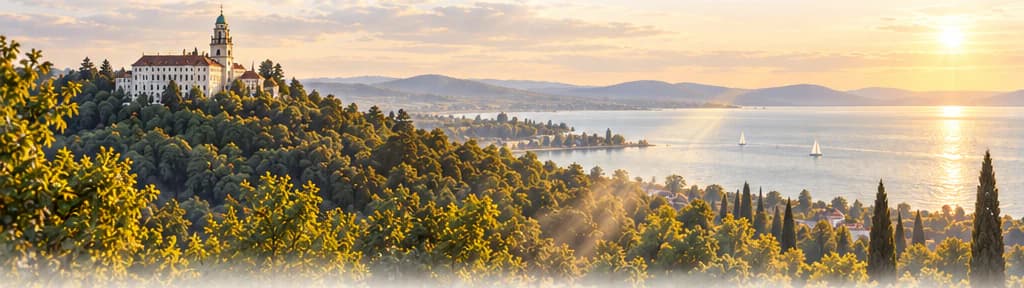
The past
obligates.
The future
offers opportunity.
KOMÁROMI MÓRIC
EDUCATION · INSTITUTIONAL DEVELOPMENT · MAINTAINER SYSTEM
Hungarian Benedictine
Congregation –
Pannonhalma Archabbey
2012 – 2019
To think in systems.
To build responsibly.
IN EDUCATION.
IN COMMUNITY.
BUILDING THE FUTURE.
It was at Pannonhalma that I truly learned,
that a school never exists in isolation.
An institution is simultaneously part of a maintainer system, a settlement, a region, a professional community, and a longer history. What we change at one point often has an impact elsewhere: in educational administration, financial management, infrastructure, admissions, local relationships, or even the daily operation of the teaching staff.
Over the five years, I worked in two interconnected leadership areas. As Deputy Director General for Marketing and Projects, I was responsible for institutional development, investments, applications, marketing, and admissions. In the first two years, concurrently, as Deputy Director General for Educational Administration, I also bore responsibility for the educational operations of the entire school network.
Deputy Director General
for Marketing and ProjectsPannonhalma Archabbey
Directorate of Education
2012 – 2017- Institutional Development
- Investments
- Applications
- Marketing
- Admissions
Deputy Director General
for Educational AdministrationPannonhalma Archabbey
Directorate of Education
2012 – 2014- Educational Operations of the School Network
- Regulation and Administration
- Supervision
- Institutional Operating Procedures
- Communication
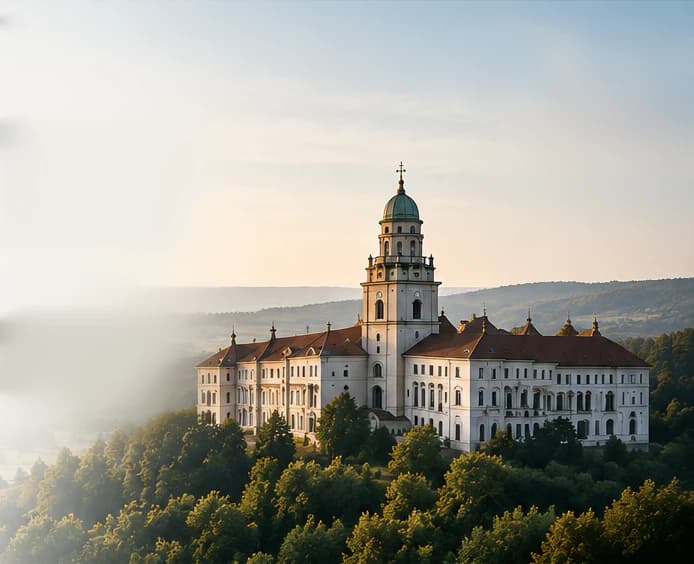
Here I truly understood for the first time,
that developing an institution is not a series of projects.It's system building.
FROM EXPERIENCE
TO VALUE.FOR THE FUTURE.
HUNGARIAN BENEDICTINE CONGREGATION
PANNONHALMA ARCHABBEY
I. HERITAGE AND
SYSTEMS THINKING –
01–03
HERITAGE · ORDER · INTERCONNECTIONS
At Pannonhalma, I didn't have to start from a single institution, but rather had to learn to see the entire maintainer system. Multiple schools, multiple leaders, multiple local communities, and various operational situations were connected within a common organization, while each institution had to preserve its own character.This perspective taught me that the same decision can have different effects in different places, and that the interest of the system as a whole is not identical to uniformization. The dual leadership role in the first few years made it especially clear to me that order and development are not opposites: they are prerequisites for each other.
Four Perspectives
ESG
Sustainable operation
begins with understanding.Before we develop, we must first understand the system, the stakeholders, the resources, and the interacting operational processes.
Brand Building
Heritage should not be rewritten
but reinterpreted.The strength of a centuries-old tradition does not stem from remaining unchanged, but from its ability to authentically present its values in new situations.
Marketing and
CommunicationFirst understand,
then speak.Authentic communication does not begin with a message, but with understanding what genuine value the institution can create.
Community and
Partnership SystemsThe strength of a system
can also be measured
by the quality of its connections.The maintainer, local leader, educator, family, community, and partner are not separate entities, but rather interacting parts of the same system.

Order
and development
are not each other's opposites:they are each other's preconditions.
FROM ROOTSBUILDING THE FUTURE.
HUNGARIAN BENEDICTINE CONGREGATIONPANNONHALMA ARCHABBEY
I. HERITAGE AND SYSTEMS THINKING — 01–03
Stepping into the
maintainer's perspective
I did not arrive at Pannonhalma as the head of a single school.
My task was to understand and support the operation of several institutions from the maintainer's perspective, while each school had its own history, local community, leader, teaching staff, problems, and opportunities.
This required an entirely different perspective.
A local leader naturally starts from their own institution. The maintainer, however, must see the entire system at once: how decisions affect each other, where common patterns exist, where standardization is justified, and where local distinctiveness should be preserved.
One of the most important lessons for me in the maintainer's work was that the same answer is not the right one for every problem — even if we are talking about parts of the same system.
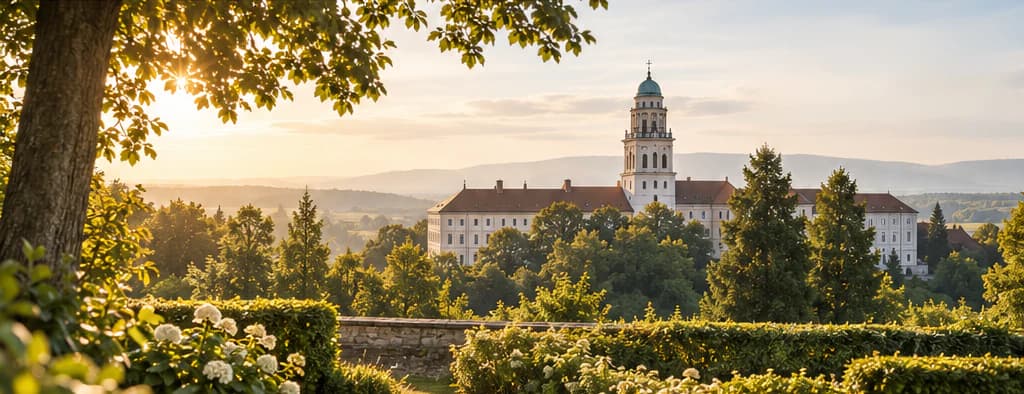
Serving the greater whole
does not diminish local values,
but strengthens them.
The essence of the maintainer's perspective
Systems thinking
The decisions of individual institutions affect each other.
Diversity
Every school has its own history, community, and operational situation.
Balance
Knowing where standardization is justified and where local distinctiveness should be preserved.
Developmental support
The maintainer's task is to create opportunities, not to enforce uniformity.
The same answer is not the right one for every problem —
even if we are talking about parts
of the same system.
COMMON FOUNDATIONSLOCAL STRENGTHSLONG-TERM IMPACT
HUNGARIAN BENEDICTINE CONGREGATIONPANNONHALMA ARCHABBEY
I. HERITAGE AND SYSTEMS THINKING — 01–03
Two leadership
roles simultaneously
Officially, I worked as Deputy Director General for Marketing and Projects at the Directorate General for Education of Pannonhalma Archabbey.
In the first two years, I also served concurrently as Deputy Director General for Educational Administration.
This duality created a unique learning situation.
On one side, there was regulation, educational operation, administration, control, and the daily operational order of the institutions. On the other, investments, developments, tenders, marketing, student recruitment, communication, and new projects.
At first glance, they might seem like two separate worlds.
In reality, they represented two sides of the same system.

Educational Administration Side
- regulation
- educational operation
- administration
- control
- daily operational order
TWO SIDES
OF THE SAME
SYSTEM
ORDERDEVELOPMENT
Marketing and Project Side
- investments
- developments
- tenders
- marketing
- student recruitment
- communication
Without order, there is no development.Without development, order can easily become mere operation.
Komáromi Móric
What did this dual role teach?
Stability
The security of operation
creates the foundation
for development.Development
Development gives meaning
to operation.Harmony
The two areas together
form the complete picture.Leadership responsibility
One must simultaneously
maintain order
and build the future.
HUNGARIAN BENEDICTINE CONGREGATION
PANNONHALMA ARCHABBEY
An institutional system
cannot be led from
a single perspective
The operation of a school is simultaneously shaped by its educational content, teaching staff, infrastructure, funding, regulatory environment, local community, enrollment, and the quality of its leadership.
At the maintainer level, these interconnections become even more apparent.
For example, an infrastructure development is not simply a construction project. It can influence educational opportunities, the school's appeal, student numbers, operating costs, and the local community's relationship with the institution.
The same applies to a new training structure, a management decision, or an enrollment campaign.
The more complex a system, the less a single problem can be treated in isolation.

The institution as a system
INTERCONNECTIONSRESPONSIBILITYSHARED FUTURE
INSTITUTION
value · operation · community
- Educational
content - Teaching staff
- Infrastructure
- Funding
- Regulatory
environment - Local
community - Enrollment
- Leadership
A change at one point
affects the entire system.
BUILDING THE FUTURE FROM ROOTS.
An institution does not consist of independent elements,
but of interacting operational areas.
HUNGARIAN BENEDICTINE CONGREGATION
PANNONHALMA ARCHABBEY
II. LEADERSHIP AND
OPERATION – 04–07
ORDER · RESPONSIBILITY · DECISION · OPERATION
After understanding the system, the next question was how to operate and develop it in a way that central responsibility would not diminish the agency of local leaders. For me, the work of a maintainer did not mean control over local institutions, but rather the establishment of clear frameworks, questions, resources, and decision-making situations. Physical developments, funding, tenders, and leadership relationships all belonged to the same operational logic: development must originate from a real institutional need, and decisions must conclude with assumed responsibility.
Four Perspectives
ESG
A resource only becomes valuable if it serves long-term operation.
Investment, financing, and operation can only be understood together.
Brand Building
The institution's credibility is built through its operation.
The brand is not independent of the leadership culture and the quality of decisions.
Marketing and
CommunicationOperational problems should not be covered up with communication.
The foundation of an authentic story is a truly functioning institution.
Community and
Partnership SystemsA local leader is not an executor, but a responsible partner.
Collaboration becomes lasting if the participants understand and embrace the common goal.
Logic of Leadership Operations
For me, the work of a maintainer was not about control over local institutions, but about creating clear frameworks, questions, resources, and decision-making situations.
- frameworks
- responsibility
- decision
- resource
- collaboration
Operational Interrelationships
OPERATION
- leadership responsibility
- development
- financing
- grants
- local institutional need
For me, the maintainer's operation was not about top-down control,
but about responsibly established frameworks, decisions, and development opportunities.
II. LEADERSHIP AND OPERATIONS — 04–07
Institutional Development
is not Building Development
During the five years, I participated in the preparation or implementation of numerous institutional renovations, developments, transformations, and new projects.
However, with these, the same question always interested me:
what makes an investment truly institutional development?
Not by an edifice being completed.
But by the new or renovated space responding to some real educational, community, or operational need.

Four Questions of Physical Development
EDUCATIONAL
CONTENTTEACHERS'
AND STUDENTS'
USE

OPERATIONAL
COSTLONG-TERM
OPPORTUNITIES
That's why I never separated physical development from
what educational content would be placed within it, how teachers and students would
use it, what its operating costs would be,
and what long-term opportunities it would open up for the institution.
HUNGARIAN BENEDICTINE CONGREGATIONPANNONHALMA ARCHABBEY
II. LEADERSHIP AND OPERATION — 04–07
Grants and financing
as a strategic tool
The application itself is not the goal.
The funding opportunity only becomes true value if it helps achieve an already understood institutional goal.
Therefore, for me, application work wasn't simply about seeking funds.
First, it was necessary to understand what the institution truly needed. Then, what development model, cost structure, and funding opportunities could be linked to it.
This idea later defined how I think about development and financing.
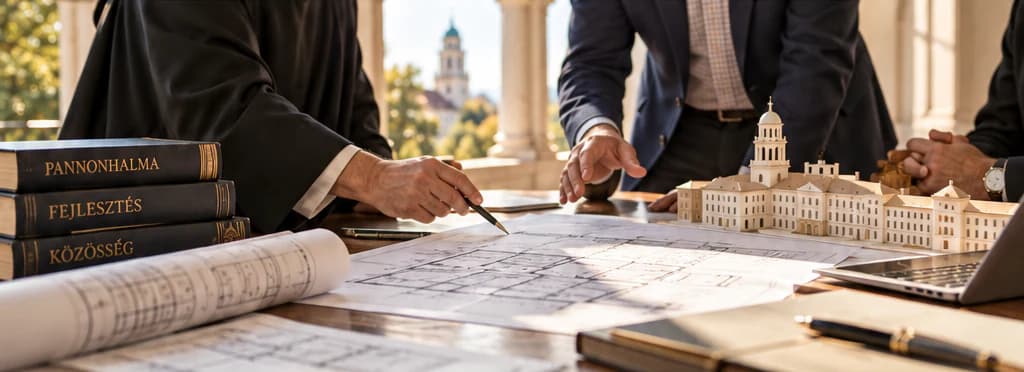
From Need to Operational Value
01
REAL
INSTITUTIONAL NEED02
DEVELOPMENT GOAL
03
PROJECT MODEL
04
COST STRUCTURE
05
APPROPRIATE FUNDING
06
IMPLEMENTATION
07
OPERATIONAL VALUE
We don't look for a project to fit the application.We look for appropriate funding for the real project.
HUNGARIAN BENEDICTINE CONGREGATIONPANNONHALMA ARCHABBEY
II. LEADERSHIP AND OPERATION — 04–07
The Local Leader
is not an Executive
At the maintainer level, it would be easy to fall into the trap of the center 'knowing better' what a local institution should do.
I never considered this a viable leadership model.
The local director is not an executive.
They know their own teaching staff, students, families, locality, and daily operations best.
The maintainer's task, therefore, is not simply to issue instructions, but to provide frameworks, questions, and support within which the local leader themselves understands and commits to the shared goal.
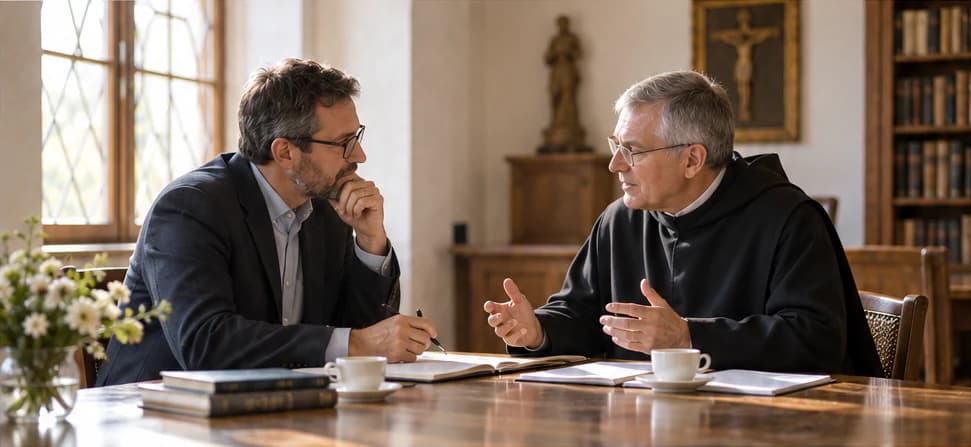
Four Conditions for Local Responsibility
Local Knowledge
The leader knows the institution's daily operations.
Clear Frameworks
The maintainer defines the frameworks leading to the common goal.
Support
Questioning and support create space for action.
Responsible Partnership
The local leader understands and commits to the common goal.
Lasting change doesn't come about
because someone executes an instruction,
but because they understand why it's worth changing.
HUNGARIAN BENEDICTINE CONGREGATIONPANNONHALMA ARCHABBEY
II. LEADERSHIP AND OPERATION — 04–07
Ask, Engage,
Then Empower
In my leadership work, I increasingly found that a good question is often worth more than a quick answer.
For me, involvement never meant that everyone had to make every decision together.
It meant that the knowledge and experience of those affected by a change should also be part of the decision-making process.
Six Questions Before the Decision
- 01
What does
the local leader see? - 02
What do
the educators say? - 03
What do
the families experience? - 04
What needs
does the settlement have? - 05
What is it
that truly works? - 06
And what is it that we only
carry forward out of habit?

The leader's task, in the end, is to
take responsibility for the decision
based on the information gathered.
HUNGARIAN BENEDICTINE CONGREGATIONPANNONHALMA ARCHABBEY
III. DEVELOPMENT,
VALUE CREATION
AND CONNECTION –
08–12
GROWTH · VALUE · CONNECTION · OPENNESS
An institution can only develop sustainably if it does not close its doors to itself. It must connect with the local community, regional actors, families, and also with those whose choices ultimately provide feedback on how relevant the institution is. In this system, marketing is not a separate communication activity either: it consists of the sequential steps of value creation, positioning, and making visible. Similarly, educational innovation is not an end in itself, but a tested and measurable response to a real problem.
Four Perspectives
ESG
Development is sustainable if it is built on real needs and measurable operations.
Brand Building
The institution's brand is built on what people consistently experience.
Marketing and
CommunicationDevelopment →
value creation →
positioning →
communication.Community and
Partnership SystemsThe institution and its environment continuously shape each other.
An institution can
only develop sustainably
if it does not close
its doors to itself.

HUNGARIAN BENEDICTINE CONGREGATIONPANNONHALMA ARCHABBEY
III. DEVELOPMENT, VALUE CREATION AND CONNECTION — 08–12
A school is always
part of the local community
During my work as a maintainer, it became clear that an institution's operations cannot be interpreted solely within the school walls.
It was necessary to build relationships with local governments, local and regional decision-makers, authorities, economic actors, and communities.
These relationships were not simply protocol-based collaborations.
In many cases, an institution's development can truly happen only if the actors around it understand why change is important and are able to connect with it.
The institution's relational environment
INSTITUTION
Local Governments
Local and Regional Decision-makers
Authorities
Economic Actors
Communities
The institution and its environment are not two separate systems.They continuously shape each other.
HUNGARIAN BENEDICTINE CONGREGATIONPANNONHALMA ARCHABBEY
III. DEVELOPMENT, VALUE CREATION, AND CONNECTION — 08–12
Marketing does not
start with communication
I did not interpret the marketing task as a classic communication activity either.
In the case of a new or reopening school, the first thing to understand was:what place can it fill in the educational system of the given settlement and region?What real need can it address?What value can it create?For whom can it be relevant?
And only after this did it make sense to talk about how we communicate all of this.
For me, marketing was therefore always part of the same process:
development → value creation → positioning → communication.
And from this, a sentence was born that I still consider important today:

From value to communication
01
DEVELOPMENT
02
VALUE CREATION
03
POSITIONING
04
COMMUNICATION
Let's not communicate a greater value
than what we have created.
HUNGARIAN BENEDICTINE CONGREGATIONPANNONHALMA ARCHABBEY
III. DEVELOPMENT, VALUE CREATION, AND CONNECTION — 08–12
Enrollment:one of the system's feedback mechanisms
I never saw enrollment merely as a marketing result.A family's choice is complex feedback.

It's about whether the school's offer is understandable, if there is trust in the institution, whether the training is relevant, if the leadership is credible, and what reputation the school has within its own community.
Communication is important, of course.But if there's no real value behind it,
communication can, at best,
arouse interest for a short time.
Understandable
offerInstitutional
trustRelevant
trainingCredible
leadershipLocal
reputation
A good enrollment strategy therefore does not begin with a campaign.It begins with institutional development.

HUNGARIAN BENEDICTINE CONGREGATIONPANNONHALMA ARCHABBEY
III. DEVELOPMENT, VALUE CREATION, AND CONNECTION — 08–12
New educational content must be tried out first
Within the institutional system, I had the opportunity to participate in the development, introduction, and evaluation of new educational content, training structures, and pilot programs.
This reinforced my belief that an educational innovation should not be considered good just because it sounds good on paper.
One must see how it works in a real environment.
Five questions for evaluating the pilot
- 01
What do the educators understand from it?
- 02
What do the students experience?
- 03
What new competencies does it require?
- 04
What organizational burden does it cause?
- 05
And does it truly yield better results than what we aim to replace?
For me, innovation isn't about novelty.It's about a better answer to a real problem.
HUNGARIAN BENEDICTINE CONGREGATIONPANNONHALMA ARCHABBEY
III. DEVELOPMENT, VALUE CREATION, AND CONNECTION — 08–12
Operating the system
is sometimes invisible work
A significant part of maintenance work is barely visible from the outside.
Issues that often run concurrently, where a single holdup can affect the functioning of several other areas.
This period meant extremely intensive work for me.

Issues running concurrently in the background
Consultations
Decision Preparation
Documents
Financing
Regulatory Issues
Leadership Challenges
Investments
Applications
Enrollment
But it was precisely this that taught me that a significant part of leadership doesn't happen in spectacular moments, but in the hundreds of small decisions that collectively keep the system running.
HUNGARIAN BENEDICTINE CONGREGATION
PANNONHALMA ARCHABBEY
IV. INTERPRETATION
AND TRANSMISSION –
13–14
REFLECTION · RESPONSIBILITY · TRANSMISSION
Today, I no longer view Pannonhalma merely as a previous leadership period. Rather, it was one of the starting points for the systemic approach that later deepened in Balatonfüred, and today has gained new meaning within the professional framework of sustainability and ESG. I don't want to project today's concepts onto the past: back then, we weren't creating an ESG strategy. However, issues concerning the built environment, people, communities, decision-making order, financing, and long-term operation were already interconnected. Above all these, a much older concept became increasingly important to me: stewardship.

Four Perspectives
ESG
Today, ESG provides a language for what I experienced as leadership responsibility back then.
Brand Building
A timeless brand creates an authentic connection between heritage and the present.
Marketing and Communication
Results should not be exaggerated, but made visible accurately and authentically.
Community and Partnership Systems
A sustainable system is not the achievement of a single leader: it is built from the connections of people and institutions.

stewardship
HUNGARIAN BENEDICTINE CONGREGATIONPANNONHALMA ARCHABBEY
IV. INTERPRETATION AND TRANSMISSION — 13–14
What I did then –
how I understand it today
When I started to delve deeper into the professional framework of sustainability and ESG years later, many Pannonhalma experiences gained new meaning.Not because we had created an ESG strategy back then.We hadn't.The concepts arrived later.However, the questions behind them were already present.

- E
Environment and Longevity
Buildings, infrastructure, resources, developments, and the question of what operational situation a decision made today will leave behind years later.
For me, the physical environment was not just a simple backdrop even then. It was a prerequisite for education, community, and management.
- S
People and Community
Local leaders, teaching staff, students, families, settlements, and communities.
A maintaining system is only as strong as its ability to treat people not merely as implementers, but as responsible actors.
- G
Order and Responsibility
Educational administration, decision-making structures, financing, measurement, leadership responsibility.
For me, governance here doesn't merely mean regulation or control.It means clarity on:- who is responsible for what;
- what information we base decisions on;
- what resources we utilize;
- how we measure if it works;
- and who bears the consequences of the decision.
And above all this, today I see the same much older idea:Stewardship.
HUNGARIAN BENEDICTINE CONGREGATIONPANNONHALMA ARCHABBEY
IV. INTERPRETATION AND TRANSMISSION — 13–14
Stewardship
It was at Pannonhalma that stewardship truly began to become a personal leadership concept for me.
What was entrusted to me is not mine.
We receive each for a time.
The task is not merely to preserve it.But to understand it, care for it, develop it if necessary, and if possible, hand it over in better condition than we received it.

An institution.
A project.
A budget.
A relationship.
A community.
Responsibility
Attention
Decision
Development
For me, stewardship is therefore not passive preservation.
And the awareness that the system I lead today existed before me, and will continue to exist after me.
This idea later shaped my thinking about leadership responsibility even more strongly in Balatonfüred.
Understand it, care for it, develop it if necessary,
and if possible, hand it over in better condition
than we received it.
HUNGARIAN BENEDICTINE CONGREGATIONPANNONHALMA ARCHABBEY
IV. INTERPRETATION AND TRANSMISSION — 13 – 14
WHAT I CARRY FORWARD FROM THIS TODAY
Today, I no longer see Pannonhalma simply as a former workplace or reference.
What I learned there is that the true development of an organization rarely happens in a single area.
Operations, people, financing, infrastructure, identity, communication, and relationships interact with each other.
If we treat these separately, we can have good projects.
If we are able to see them in their interconnectedness, a system can be born.
Today, I also carry forward four areas of this thinking
in the work of SDG Solutions.
ESG
From responsibility to operational model.
Not merely to produce compliance documents, but to understand how environment, people, decision-making, and long-term operation are interconnected.
Brand Building
From heritage to contemporary value.
To recognize what is enduring and to shape it into an identity that is understandable and authentic in the present.
Marketing and
CommunicationFirst, create value. Then make it visible.
Not to claim more than what we have created, but to present it accurately, clearly, and consistently.
Community and
Partnership SystemsFrom individual players to a collaborative system.
To connect people, institutions, knowledge, resources, and interests in such a way that common achievements emerge from these relationships.
In Pannonhalma, I learned to see systems.In Balatonfüred, I learned to lead and transform a system.Today, I carry these two experiences forward in the work of SDG Solutions.
HUNGARIAN BENEDICTINE CONGREGATIONPANNONHALMA ARCHABBEY
IV. INTERPRETATION AND DISSEMINATION — 13–14
FROM HERE
TO BALATONFÜRED
In Pannonhalma, for five years, I primarily learned to see systems from a maintainer's perspective.
I learned how they connect:
education and infrastructure
financing and development
leadership and community
value creation and communication
local autonomy and maintainer's responsibility
In 2017, however, a different situation arose. I didn't have to support the operations of multiple institutions from a maintainer's perspective.
I had to personally take responsibility for the entire operation of a single institution.

In Pannonhalma,
I learned
to see systems.

In Balatonfüred,
I had to learn
to be responsible
for an entire system.